
Transforming Food Systems: YADAM Foundation and Embassy of Sweden Explore Strategic Partnerships for Climate Resilience
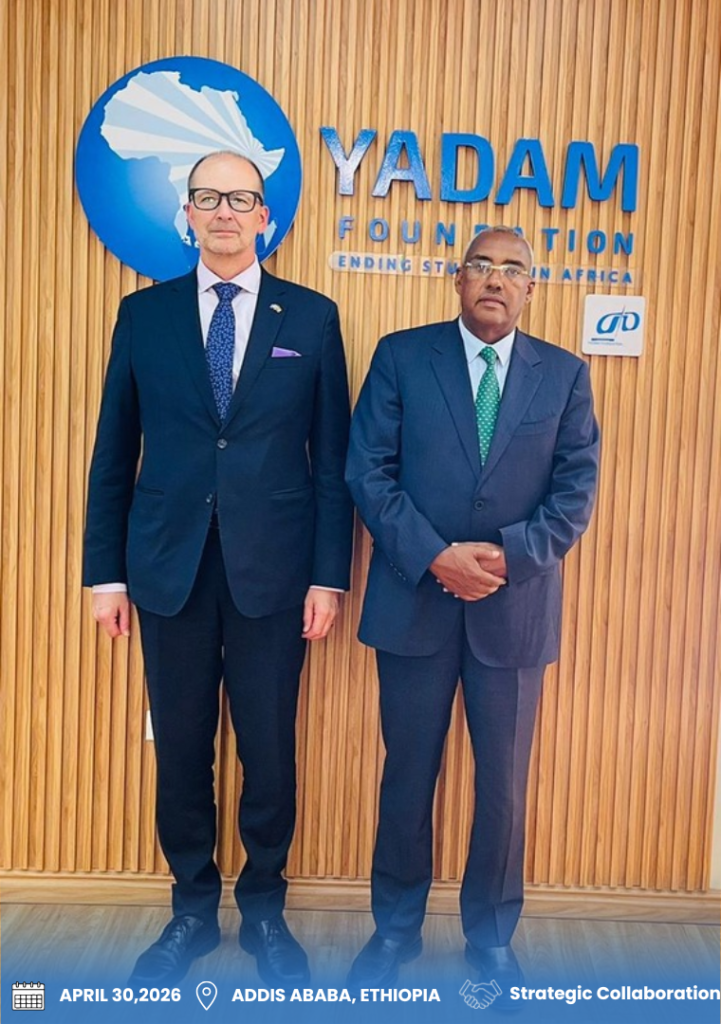
ADDIS ABABA, ETHIOPIA — Building resilient food systems in the face of accelerating climate shocks requires global solidarity, localized innovation, and strong diplomatic partnerships. To advance this mission, leadership from the YADAM Foundation recently held a high-level consultative meeting with the Embassy of Sweden in Ethiopia to map out strategic collaborations centered on sustainable development, food security, and nutrition.
During the diplomatic session, the YADAM Foundation presented its comprehensive portfolio of grassroots interventions designed to protect and empower Ethiopia’s most vulnerable populations. The discussion centered on three pillars:
- Integrated Food Security: Scaling structural solutions to eradicate hunger and optimize macro-level nutrition.
- School Feeding Programs: Ensuring consistent, nutrient-dense daily meals for children to secure both health and educational outcomes.
- The Blue Hub Initiative: Showcasing YADAM’s flagship ecosystem model that pairs sustainable agriculture with localized aquaculture and fish farming to generate climate-resilient livelihoods.
The Swedish Ambassador expressed strong alignment with YADAM’s multi-sectoral approach, noting Sweden’s long-standing global commitment to climate adaptation and food system transformation. Highlighting a shared interest in moving communities from vulnerability to economic self-reliance, the Embassy underscored its willingness to support evidence-based initiatives that reinforce local nutrition security.
The meeting concluded with a mutual agreement to continue technical dialogues, aiming to translate shared policy goals into joint implementation frameworks that protect livelihoods across Ethiopia.
Global Context: The Intersection of Diplomacy and Food Systems
This meeting highlights three critical shifts reshaping international development today:
1. The Freshwater Blue Economy as a Climate Shield
Traditional agriculture is increasingly vulnerable to unpredictable weather patterns. International partners are shifting focus toward the “Blue Economy”—specifically inland aquaculture and fish farming. By integrating low-footprint aquatic protein production into dryland ecosystems, initiatives like the Blue Hub provide a dual-benefit: immediate micro-nutrient security and an alternative, climate-insulated income stream for smallholder farmers.
2. Shifting from Emergency Aid to Structural Resilience
Modern diplomatic partnerships are moving away from short-term humanitarian food aid. The focus has pivoted toward funding institutional systems—such as localized school feeding networks and decentralized agricultural supply chains. This structural approach ensures that local economies are stimulated from within, building long-term independence from external food supplies.
3. Academic and Diplomatic Co-Investment
Siloed development projects are being replaced by matrix coalitions. By linking diplomatic partners (who bring global standards and development finance) with domestic foundations and regional universities, project designs gain the localized data needed to scale effectively.


